A 3D CBCT (Cone Beam Computed Tomography) Scan—one of the advanced imaging technologies—takes high-resolution, three-dimensional pictures of the teeth, jaw, and nearby areas. Dr. Dhargalkar's Multispeciality Dental Clinic, which is famous for the best CBCT scan for dental treatment in Gandhi Nagar, Bandra, Mumbai, provides this state-of-the-art technology for dental care that is precise and safe at the same time. CBCT gives a 360-degree view compared to traditional 2D X-rays, allowing dentists to see very clearly the subtle features of teeth, bones, and soft tissues.
The cone-shaped X-ray beam captures the whole area in one rotation, thus making the scans faster, and safer, and reducing the radiation exposure to patients. This technique leads to accurate diagnosis, proper treatment planning, and better results in dental implants, orthodontics, and other complex procedures.
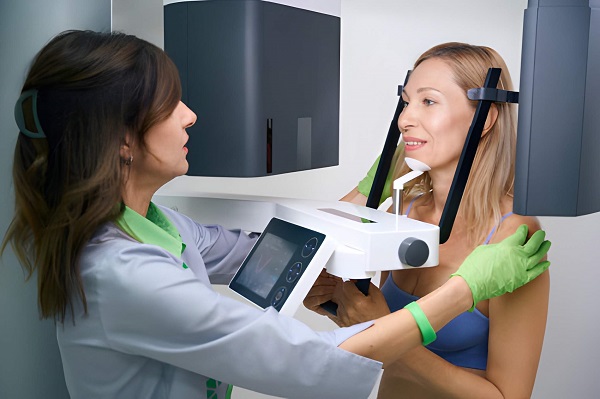
At Dr Dhargalkar's Multispeciality Dental Clinic, the procedure for acquiring a 3D CBCT scan is straightforward and practical. The patient is placed inside the CBCT machine, which is like a huge, open-faced cylinder. The machine rotates around the patient's head, taking many X-ray pictures from various angles. After that, the advanced software puts together the pictures and develops a detailed 3D model of the mouth and teeth.
The whole process lasts less than a minute, and the images produced are already on the computer screen for viewing and changing. It is very helpful for a dentist to look at the information from different directions, therefore, enabling him to make the right diagnosis, draw up the treatment plan with the exactness, and guarantee the success of the procedures like implants, braces, and other complex tooth work.
High-resolution 3D imaging for accurate diagnosis.
Essential for precise implant placement and surgical planning.
Improved safety by identifying nerves, sinuses, and bone structure.
Faster treatment planning with no external referrals.
Low radiation exposure with advanced imaging technology.
Enhanced Visualization: CBCT could have a different diagnosis and thus treatment if dentists relied solely on dental X-rays since it shows a full 3-D picture of the teeth, jaws, and surrounding structures that are clear even with technical detailing.
Improved Accuracy: In cases of dental restoration, inaccurately measured teeth might lead to troublesome adjustments or even remakes. Hence, CBCT provides high-resolution images that support the selection of precise measurements and treatment plans that finally result in good clinical outcomes.
Reduced Radiation Exposure: CBCT is a less harmful procedure to the patients' health especially young ones since it is about 10 times less in terms of radiation exposure compared to traditional CT scans.
Faster Scan Times: The scanning process only lasts for minutes, so patients will not have to stay uncomfortable for a long time.
Versatile Applications: CBCT technology could play a role in the diagnosis of several dental and maxillofacial conditions, including but not limited to the teeth that are not fully erupted or TMJ disorders.
The 3D CBCT scans' versatility has led them to be recognized as indispensable in the various fields of dentistry, which include:
Implant Planning: along with the jaw bone density and volume, CBCT scans also provide detailed information regarding the patient's anatomy, which in turn allows to perform planning and placement of dental implants more accurately.
Orthodontic Treatment: orthodontists can make use of CBCT scans in the sense that they can know not only the location and direction of teeth but also the shape of the underlying bone and hence make better plans for treatment.
Endodontics: the use of CBCT scans in this field leads to the identification of complicated root canal anatomy, detection of apical lesions, and planning of endodontic procedures with higher accuracy.
Oral and Maxillofacial Surgery: CBCT scans enable diagnosing and producing a surgical plan for complex surgical procedures like impacted wisdom teeth removal, jaw realignment, and facial trauma treatment.
TMJ Evaluation: the utilization of CBCT by dentists in order to obtain perfect views of the temporomandibular joint (TMJ) is very enlightening in the case of identifying and diagnosing TMJ disorders.
Airway Analysis: the application of CBCT in this area is to evaluate the patient's airway volume and detect any possible blockages, which is especially advantageous for the planning of sleep apnea treatment.
Generally, the process of preparing for the 3D CBCT scan is simple. In such a case, the patients are requested to take off all metal-related items like jewelry or dentures that are likely to impact the imaging process. Apart from that, the dental team should be made aware of the patient's medical issues and allergies as these may have an impact on the scan or the interpretation of the reports. In some situations, the patients are told not to eat or drink for a short time prior to the scan, to prevent any food or liquid seen in the mouth from covering the images. Moreover, the patients sometime are asked to hold their breath or be totally still, so very little movement that can affect the quality of the image is allowed.
The use of 3D CBCT scans in dentistry has completely transformed the field and has allowed the health professionals to diagnose and treat a number of oral and maxillofacial conditions. At the Multispeciality Dental Clinic of Dr Dhargalkar, the patients are getting the best advantages from the highest visualization, accuracy, and minimal radiation exposure, all through the scanning process... When talking about today's dental practice, imaging techniques have paved the way for the provision of the accurate, safe, and effective treatment of dental care. Best CBCT scan for dental treatment in Gandhi Nagar, Bandra, Mumbai.